
yoga for digestion

Yoga for Digestion: A Complete Digestive Health Yoga Flow for Better Gut Health

What is Digestive System

yoga for digestion

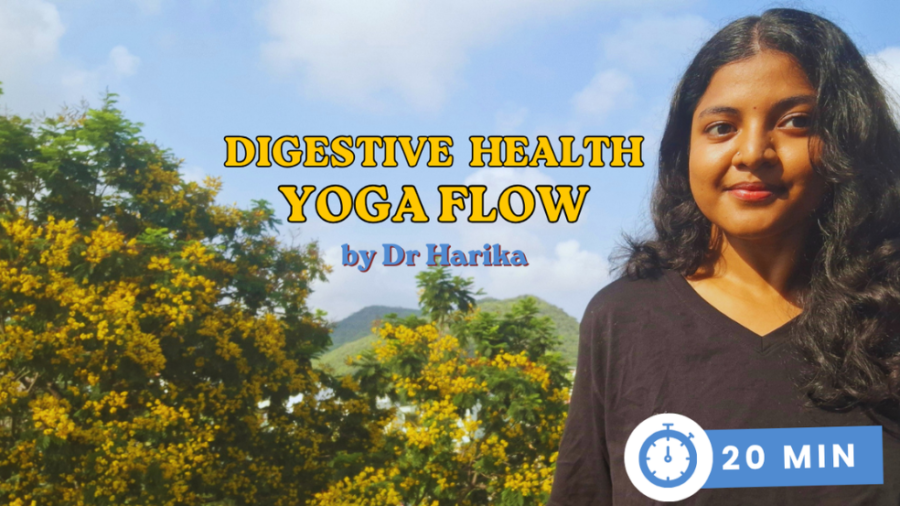
It’s hard to deny the fact that Digestive system is a place where food gets converted into our body parts. What if there are issues in our digestive system? Yes, you guessed it right. The quality and efficiency of our body parts will keep on declining making us sick. Digestive health is not just limited to acidity and constipation; it’s a lot more than that. I’m not going to bring all of that here but I designed an amazing flow of asanas known as Yoga for Digestion, A simple 20-minute practice.

Healthy Digestive System = Happy 100

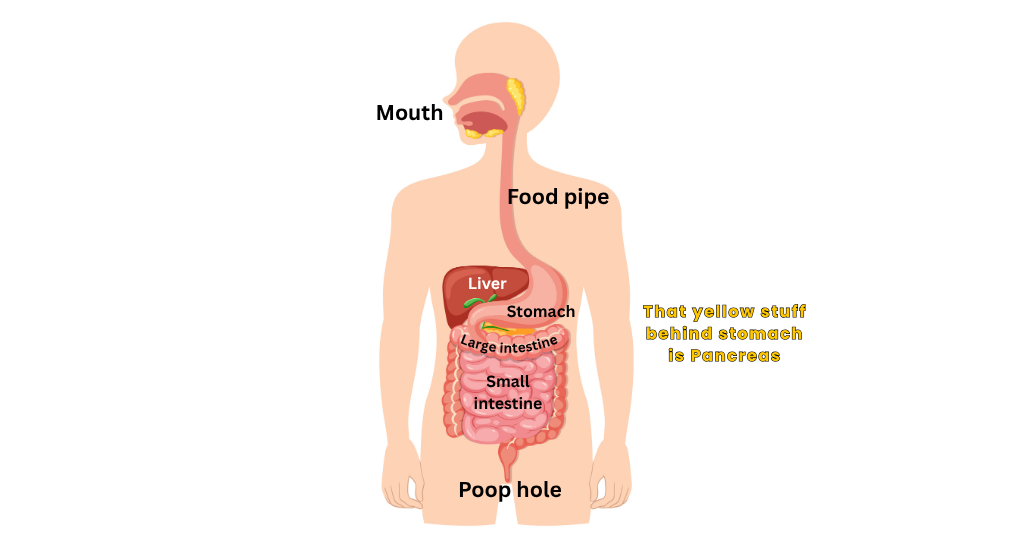
Digestive system = A tube originating from mouth to poop hole includes stomach, small intestine and large intestine + God level organs like liver, pancreas and spleen

Reasons for Poor Digestion

yoga for digestion

Consumption of

  1. Very dry food (all crunchy and crispy foods like crackers, chips, biscuits etc.)
  2. Excess oily food (pizza, burger, fried chicken, pastries etc.)
  3. Heavy meals
  4. Half cooked food
  5. Cold food and cold drinks
  6. Excessive drinking of water
  7. Caffeine & sweets

Habituated to

  1. Unguided fastings
  2. Suppression of natural urges
  3. Improper sleeping schedule
Ayurveda magazine

Ayurvedic Monthly Newsletter

A monthly dose of Ayurveda for modern living.

Seasonal wellness tips, herbs, and simple rituals.

Small steps towards natural balance.

Who is often

  1. Worried
  2. Anxious
  3. Anger etc. during meal

Poor Digestion Symptoms

In our body poor digestion or disturbed digestive health manifests in the form of us experiencing the following symptoms

yoga for digestion
  1. Heaviness of abdomen
  2. Frequent burps after meals
  3. Loss of hunger
  4. Flatulence
  5. Vomiting
  6. Diarrhea
  7. Constipation
  8. Weakness
  9. Low Hb

Yoga Flow for Digestive Health

Asanas like Shalabasana (locust pose), Dhanurasana (bow pose), Bhujangasana (cobra-pose) and Ushtrasana (camel pose) helps a lot. Pranayama practice like Nadi shodana keeps your gut happy. I have prepared a 20-minute digestive health yoga flow which includes all these asanas along with pranayama practice for you in the video below. It’s best to practice the flow early morning on an empty stomach

Disclaimer

This practice is designed for general wellness. If you have any medical conditions, are pregnant, or experiencing severe digestive issues, it’s best to consult a qualified practitioner before starting.

Consult with me

If you are confused about the status of your gut health, I invite you to book a DISCOVERY CONSULTATION with me where I will help you in decoding this confusion and safely drive you to the zone of clarity.

yoga for digestion
de bloat

3 Powerful Digestive Hacks to Reduce Bloating Naturally

Digestion as key to reduce bloating

The process of digestion is the process of cooking happening inside the body. Before we cook any dish, we have to turn on the stove, while cooking is happening, we have to make sure that the temperature is at right setting and once we’re done with cooking it’s important to turn off the stove. Luckily our body is super intelligent and it can perform all of these activities by itself. All we have to do is

• To cooperate with it through these processes and
• To avoid causing troubles

What why and how of bloating

Ayurveda says that the root cause of majority of diseases is Manda agni (manda= sluggish | agni = digestion & metabolism). Manda agni happens when the body loses its intelligence of turning on the stove, regulate the cooking process and turn off the stove which leads to indigestion, bloating, constipation etc., Now let’s learn 3 digestive hacks to reduce bloating ayurvedically.

Hack: 1 – Turning on the stove

To turn on the stove inside our body we need

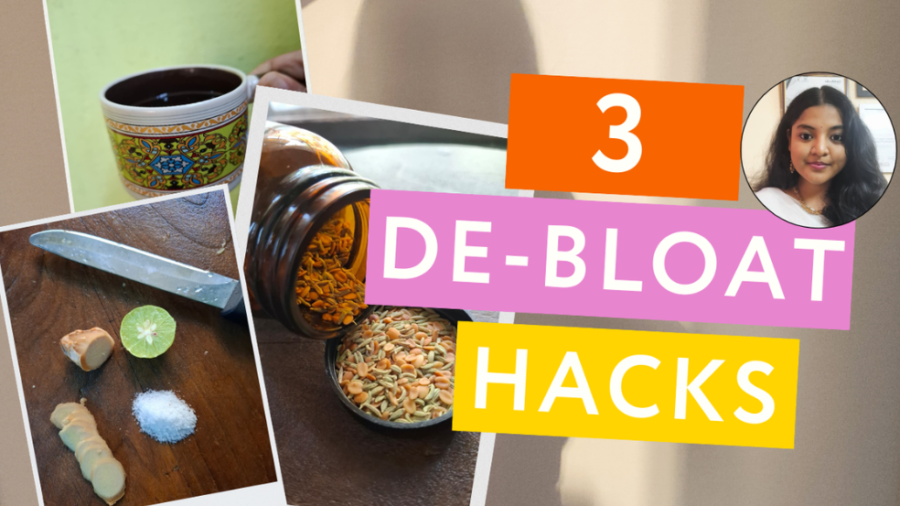
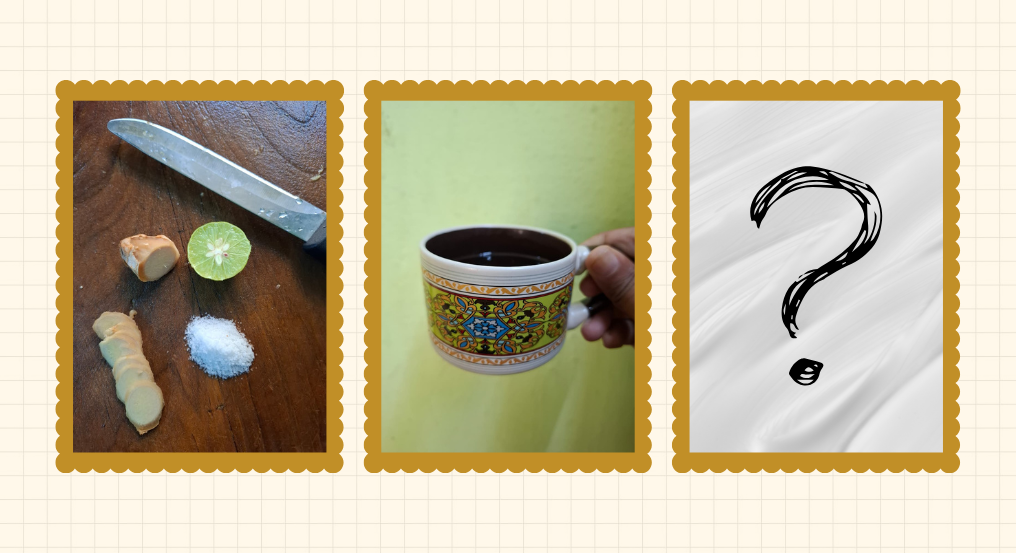
Fresh ginger: 1 inch (thinly sliced)
Salt: a pinch
Lemon juice: 1 tbsp

Combine all of these ingredients in a small bowl. Chew 2 to 3 slices 30 minutes before every meal

Ingredient break-down

Properties of Ginger:

  1. Ruchya – known for improving the taste
  2. Deepaniya – that which improves the digestion and metabolism
  3. Vibandha hara – helpful in clearing the obstructions (gases & poop) in gastro-intestinal tract
Ayurveda magazine

Ayurvedic Monthly Newsletter

A monthly dose of Ayurveda for modern living.

Seasonal wellness tips, herbs, and simple rituals.

Small steps towards natural balance.

Properties of salt (Lavana rasa):

  1. Ushna – hot in potency
  2. Rochana – improves taste
  3. Deepana – improves digestion and metabolism

Properties of lemon juice:

  1. Ama dosha hara – destroys ama (toxic products formed when food is consumed during indigestion)
  2. Vahni mandya hara – relieves us from indigestion
  3. Dipana-pachana – acts as carminative and digestive

Hack: 2 – Temperature regulation while cooking

We don’t end up with a great dish when the stove turns off in the middle of cooking. To make sure that the flame or temperature is continuing throughout the process, cumin tea helps. A good cumin tea needs

  1. Roasted cumin powder: a pinch
  2. Water: ½ cup (125ml)

Into a tea pan add water, cumin powder and bring it boil. Switch off the flame and let the cumin tea cool down. Once it’s lukewarm, pour it into a cup and take sips of this cumin tea while eating food instead of plain water.

Ingredient breakdown:

Properties cumin seeds:

  1. Agni vardanam: improves digestive strength
  2. Garbhashaya vishuddi krut: cleanses uterus
  3. Vata anulomanam: relieves bloating and helps in expelling the gases in gastro-intestinal tract
  4. Deepana-pachana-ruchya – Carminative, digestive and improves the taste

Hack: 3 – Turning off the stove

Once we are done with cooking, we must turn off the stove or else that delicious dish will burn and it becomes something that is no longer fit for consumption. To avoid this from happening inside our body, we need,

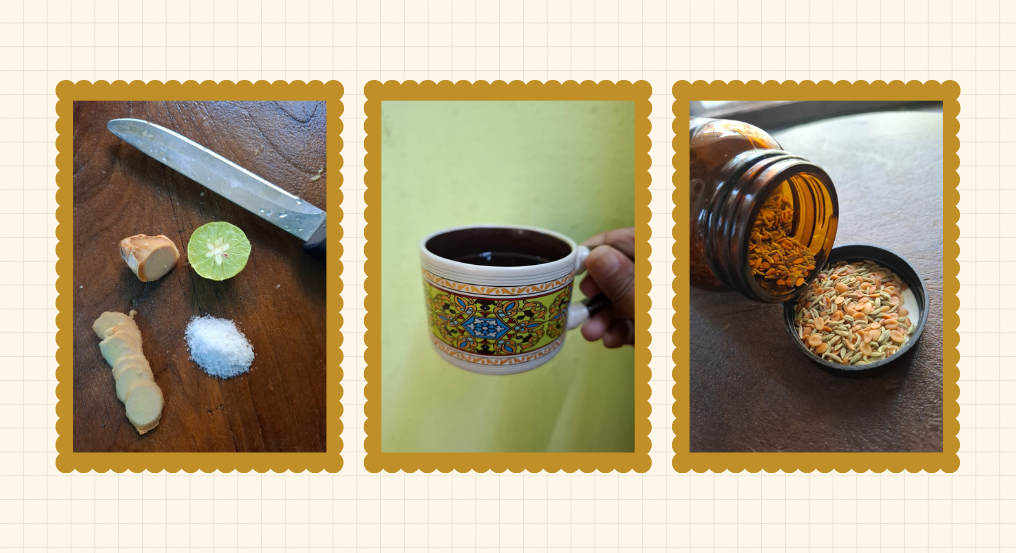
  1. Fennel seeds: ½ tbsp
  2. Toasted coriander seeds: ½ tbsp

I usually mix 50 grams of each of these ingredients and store it in an air-tight glass bottle. After completing my meal every day, I chew a table spoon of this mixture.

Ingredient breakdown

Properties fennel seeds:

  1. Swadu- tikta – it’s sweet and bitter
  2. Sheeta – sooths and cools down the environment inside stomach

Properties of roasted coriander seeds:

  • Grahi – Controls the excess fluidity in the gastro-intestinal tract post-meal consumption.

These hacks works best when the meal timings are regular. Following these steps with every single meal that you consume, helps in improving your gut peristaltic movements, reduces gas/ bloating, improving your digestive strength to peak level, facilitates highest bio-availability of nutrients and you will be blessed with outstanding levels of immunity.

Conclusion:

A summarized version of all the digestive hacks along with the recipe videos are included in my YouTube video linked below.

vata pitta kapha meaning

Vata Pitta Kapha meaning: A Simple Beginner’s Guide to Three Doshas

NAMASTE 🙏

What are Vata, Pitta and Kapha

The 3 popular globally recognized terms of ayurveda are Vata, Pitta and Kapha. These are called as doshas by Ayurvedic clinicians. To understand a little bit about where these pieces fit into the puzzle of Ayurveda, I highly suggest you to checkout my blogpost on what is ayurveda first and then come back here. The literary meaning of dosha is fault. You’ll get to know the why sooner.

Vata, Pitta and Kapha meaning

Vata, Pitta and Kapha are 3 elements which are recognized by certain group of qualities. They are as follows:

Vata means the combination of the following 6 qualities

  1. Ruksha (Dryness)
  2. Laghu (Lightness)
  3. Sheeta (not so cold, not so hot in this context)
  4. Khara (Roughness)
  5. Sukshma (Minuteness)
  6. Chala (That which facilitates the movement i.e. both voluntary and involuntary movements)

Pitta means the combination of the following 7 qualities

  1. Sa Sneha (not too unctuous, not too dry)
  2. Teekshna (Sharpness)
  3. Ushna (Hotness)
  4. Laghu (Lightness)
  5. Visram (Unpleasant smell)
  6. Saram (Spreadable)
  7. Dravam (Fluidity)

Kapha means the combination of the following 7 qualities

  1. Snigdha (Unctuous)
  2. Sheeta (Coldness in this context)
  3. Guru (Heaviness)
  4. Manda (Stagnant)
  5. Slakshna (Smooth)
  6. Mritsna (Sticky)
  7. Sthira (Stable)

Role of Vata, Pitta and Kapha in Health and Disease

vata pitta kapha health
Photo by Marea Wellness on Unsplash

Three Doshas as Contributing Factors of Health

If we look at all the above-mentioned qualities closely, every organ of human body is made up of the combination of two or more of these characters only. To make this clear, I’ll quote a few examples.

Hair: It’s mostly can be rough, tough and strong. (purely vata)

Lungs: surrounded by fluids, they contain minute air-filled sacs called alveoli (combination of vata and kapha)

Stomach: Secretes Hcl (Hydrochloric acid) which is hot in potency. This Hcl is fluid and spreadable in nature (purely pitta)

Three Doshas as Contributing Factors of Disease

Vata pitta kapha disease
Photo by Martha Dominguez de Gouveia on Unsplash

Diseases are caused when the natural qualities of these doshas become abnormal such as

  1. Excessively dry or oily hair
  2. Difficulty in breathing
  3. Hyper acidity or Indigestion

Vata, pitta and kapha are superiorly known for their disease-causing ability rather than their role in health maintenance in a balanced state. This is because just a slightest deviation in them for a considerable period of time, can even cause death. Hence they are identified as three doshas than just vata pitta and kapha.

Three doshas and Prakriti

This is the most confusing section in this whole blogpost but I will do my best in making this super easy to digest for you. Prakriti is the genetic makeup of an individual which is decided at the time of the fertilization itself. There are 7 broad categories of prakriti based upon the predominance of qualities of doshas and we all fit into any one of it. They are as follows:

what ayurveda is
  1. Vataja prakriti (A person born with majority of qualities leaning towards vata dosha)
  2. Pittaja prakriti (A person born with majority of qualities leaning towards pitta dosha)
  3. Kaphaja prakriti (A person born with majority of qualities leaning towards kapha dosha)
  4. Vata-Pittaja prakriti (A person born with majority of qualities leaning towards vata and pitta doshas)
  5. Pitta-Kaphaja prakriti (A person born with majority of qualities leaning towards pitta and kapha doshas)
  6. Kapha-Vataja prakriti (A person born with majority of qualities leaning towards kapha and vata doshas)
  7. Vata-Pitta-Kaphaja prakriti (A person born with balanced doshas- very rare)

We’ll see an example: There is a person who is having dry, frizzy and curly hair and have breathing problems since birth and is obese since childhood. The characters dryness, frizzyness and curls are leaning towards vata dosha, where as having breathing problem indicates the involvement of both vata and kapha doshas. Finally, obese means kapha hence this individual can be of Vata-Kapha Prakriti.

Uniqueness of ayurvedic consultation

Let’s say initially you are born with a combination of qualities of vata-pitta doshas, but over time due to the influence of food and lifestyle habits, you turned out to be an individual with qualities leaning towards vata-kapha doshas which is causing so much disturbance in your health status then how are to supposed to know what is your actual prakriti? Prakriti is your genetic makeup and it’s there from the moment you took birth as a single cell and it will remain until the moment you die but your food and lifestyle choices confuses your current state with the actual prakriti that you are born with.

Ayurveda magazine

Ayurvedic Monthly Newsletter

A monthly dose of Ayurveda for modern living.

Seasonal wellness tips, herbs, and simple rituals.

Small steps towards natural balance.

In an ayurvedic consultation, a qualified ayurvedic doctor is capable to distinguish what’s natural to you from the current symptoms of a diseased state and helps you to cure the disease without disturbing your actual prakriti. This is why it’s very crucial to have a proper ayurvedic consultation with a qualified ayurvedic doctor before you decided to purchase some over-the-counter ayurvedic herbal blends, ayurvedic herbal teas, ayurvedic protein powders etc., and use them.

Ayurveda is never about one size fits all

Summary

Please watch the youtube video attached below which summarizes this blogpost

what is ayurveda

What is Ayurveda: A Beginner Friendly Guide

NAMASTE 🙏

Ayurveda is vast and it’s extremely difficult to put it into just one blog post. With my sincere apologies to all the Gurus of Ayurveda, I dared to bring out a post like this for the sake of letting the world know, what exactly Ayurveda stands for and throw some light on very commonly misinterpreted terms and treatments of Ayurveda. I did my best to put out a bird’s eye view of What is Ayurveda in an easily digestible format

What is Ayurveda

The word Ayurveda is the combination of 2 terms AYU and VEDA. Ayu means life and Veda means science or knowledge. So, Ayurveda is known as “The Science of Life”.

what is ayurveda

Edited: Photo by The New York Public Library on Unsplash

Definition of Health according to Ayurveda

Sanskrit sloka from ayurvedic scriptures

Sama doṣaḥ samāgniś ca sama dhātu mala kriyaḥ

prasannātmendriya manāḥ swastha ityabhidhīyate

Let’s decode the sloka

Sama Dosha

Sama = equilibrium / balance (neither more nor less)

In this context, Dosha refers to prime element of the body which helps the body to thrive and also have the capacity to cause disease/ discomfort when disturbed. There are 5 of such doshas inside our body which fit into this definition. 3 of them (vata, pitta and kapha) are capable to cause disease at the level of body and the remining 2 of them (rajas and tamas) are capable to cause disease at the level of mind.

Health is “Equilibrium of health maintaining elements”

Sama Agni

Sama = equilibrium / balance (neither too much nor too less)

Agni means the one that has the potential to transform i.e. digestive fire. A prime element that supports the whole process of transformation of food that we ate into energy and waste materials is called Agni.

Health is “Equilibrium of all the digestive and metabolic processes.”

Sama Dhatu

Sama = equilibrium / balance (neither excess nor depleted)

The structural and functional tissue of the body is known as Dhatu. There are 7 such dhatus with which our body is made up of. They are as follows

  1. Rasa dhatu (Plasma- liquid component of blood)
  2. Rakta dhatu (Blood- Fluid connective tissue)
  3. Mamsa dhatu (Muscle tissue)
  4. Medo dhatu (Adipose/ Fat tissue)
  5. Asthi dhatu (Bone tissue)
  6. Majja dhatu (Bone marrow)
  7. Shukra dhatu (Reproductive fluids)

Health is “Balanced nourishment of all dhatus”

Sama Malakriya

Sama = Equilibrium / balance (neither heavy not scanty)

Mala kriya is the process of elimination of waste materials from the body in the form of pee, poop and sweat.

Health is “Balanced evacuation of toxic wastes”

Prasanna atma, indriya, manas

Prasanna = pleasantness

Atma = soul

Indriya = senses

Manas = mind

Summarised Definition of Health

The balance of life sustaining factors, digestive and metabolic processes, tissue nourishment, and elimination of waste materials along with the pleasantness of soul, senses and mind is known as health according to Ayurveda. (AKA Homeostasis / stable internal environment).

Ayurveda for beginners
Edited: Photo by Hennie Stander on Unsplash

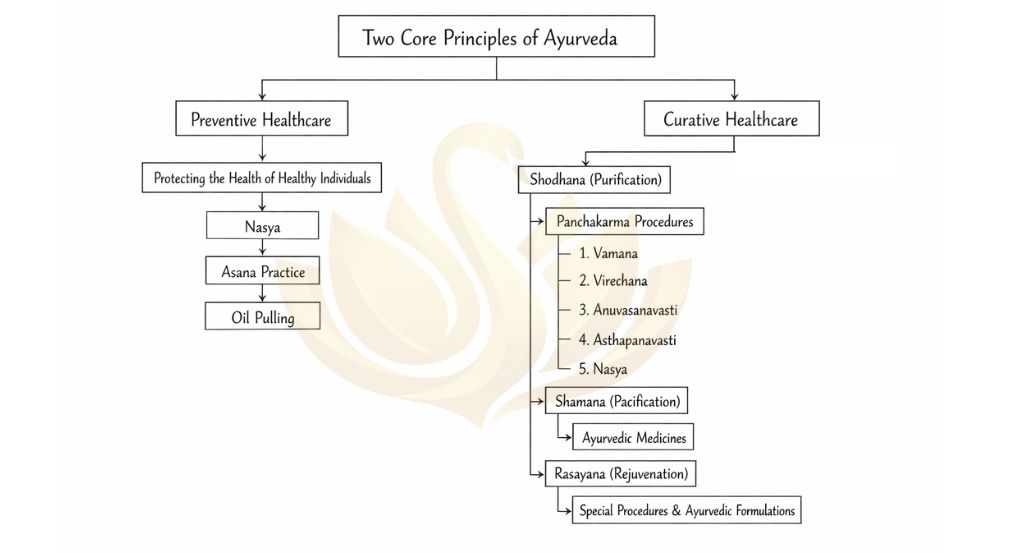
Two Core Principles of Ayurveda

Ayurveda stands by

  1. Protecting the health of a healthy individual (preventive healthcare)
  2. Curing the disease of a patient (curative healthcare)

Preventive Healthcare: Ayurveda Edition

Can you believe the fact that Ayurveda described about wellness 5000 years ago? Yes, you heard it right. Like today, it’s not about trendy gadgets / supplements/ hitting gym no matter what. Ayurvedic wellness is all about incorporating consciously curated daily and seasonal rituals which nourishes body, mind and soul which are surprisingly functional and valid till date. These rituals range from the time of waking up to exercise, to diet, to sleep and a lot more in between. Some of the popular practices like abhyanga, nasya, yoga asana practice, oil pulling etc.., comes under Ayurvedic Wellness.

Curative Healthcare: Ayurveda Edition

Disease treatment protocol in Ayurveda is exceptional. It happens in 3 steps

  1. Shodana (Purification)
  2. Shamana (Pacification)
  3. Rasayana (Rejuvenation)
Ayurveda magazine

Ayurvedic Monthly Newsletter

A monthly dose of Ayurveda for modern living.

Seasonal wellness tips, herbs, and simple rituals.

Small steps towards natural balance.

SHODANA

Let’s start with an example. A greasy / dirty vessel must be cleaned first before we cook something in it. The same way, when the disease is in a stage of complete manifestation, the person has to undergo cleansing therapy before administering any kind of medicines. For this purpose Ayurveda described 5 cleansing processes popularly known as Panchakarma (in sanskrit language, pancha means 5 and karma means procedures). They are as follows:
1. Vamana (therapeutic emesis)
2. Virechana (therapeutic purgation)
3. Anuvasana vasti (medicated unctuous enema)
4. Asthapana vasti (medicated decoction enema)
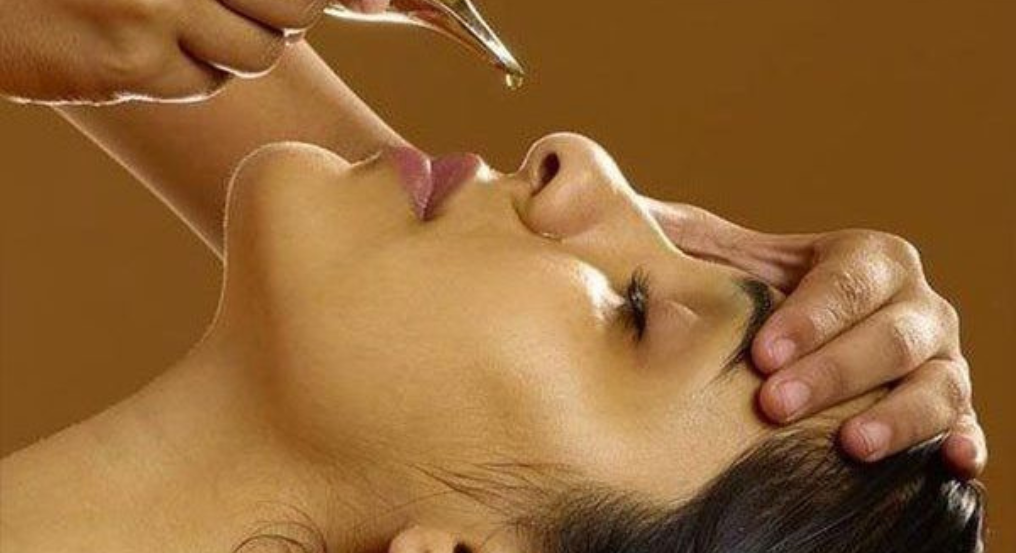
5. Nasyam (administering oil based / water-based herbal active principles through nostrils)

SHAMANA

Here we have wide range of Ayurvedic classical and proprietary medications for treating several disease conditions by breaking the disease pathogenesis. If the stage of disease is not chronic or is having a recent onset then there is no need for a person to undergo panchakarma procedures. If the stage of disease is chronic, then a person must go through shodana procedure first followed by using medications to subside the disease.

RASAYANA

The set of procedures and formulations made out of herbs which prevent the recurrence of the disease and preserve the health of an individual is known as rasayana with respect to Ayurveda.

all about ayurveda

Unpacking the concept of Prakriti

Prakriti means Nature i.e. Nature of the person. No two persons on this planet are the same. Every individual is a unique creation. Sometimes, they might look the same in appearance but their preferences / choices / thought processes are entirely different. Ayurveda says that it’s because of combination of different doshas in different degrees at the time of fertilization (when mom’s egg meets dad’s sperm and a single celled you are formed). The process of this combination of doshas is entirely dependent on the doshic status of the couple which is highly influenced by their diet and lifestyle habits.

To summarize, prakriti is the genetic makeup of an individual and understanding the prakriti of an individual is extremely important for ayurvedic doctors because it helps us in choosing the right herbs and giving that customized prescription of diet and lifestyle habits as well.

what ayurveda is
Edited: Photo by Google DeepMind on Unsplash

Who is an Ayurvedic Doctor

The professional degree of an ayurvedic doctor in India is called “BAMS” which stands for Bachelor of Ayurvedic Medicine and Surgery. It’s a 5.5-year graduation equivalent where ayurvedic doctors learn all about assessment of prakriti, doshas, diseases, herbs, treatments, diet, lifestyle and earns the capability to personalise them according to the need of an individual. This process of personalization cannot be done by companies that sells herbs or that make supplements or health drinks or assorted herbal teas. This is why some popular herbs like Ashwagandha, Shilajit, Turmeric, Giloy etc…, might work for some and might show allergic reactions to others.

If you want to know to what all the diseases Sakhi Ayurveda offers treatment for,(click here). If you are planning to take professional ayurvedic consultation with me, (click here)

Conclusion

I have summarized this blog post in the video below. Feel free to check it out.