Ayurveda is vast and it’s extremely difficult to put it into just one blog post. With my sincere apologies to all the Gurus of Ayurveda, I dared to bring out a post like this for the sake of letting the world know, what exactly Ayurveda stands for and throw some light on very commonly misinterpreted terms and treatments of Ayurveda. I did my best to put out a bird’s eye view of What is Ayurveda in an easily digestible format
The word Ayurveda is the combination of 2 terms AYU and VEDA. Ayu means life and Veda means science or knowledge. So, Ayurveda is known as “The Science of Life”.
Sama = equilibrium / balance (neither more nor less)
In this context, Dosha refers to prime element of the body which helps the body to thrive and also have the capacity to cause disease/ discomfort when disturbed. There are 5 of such doshas inside our body which fit into this definition. 3 of them (vata, pitta and kapha) are capable to cause disease at the level of body and the remining 2 of them (rajas and tamas) are capable to cause disease at the level of mind.
Health is “Equilibrium of health maintaining elements”
Sama Agni
Sama = equilibrium / balance (neither too much nor too less)
Agni means the one that has the potential to transform i.e. digestive fire. A prime element that supports the whole process of transformation of food that we ate into energy and waste materials is called Agni.
Health is “Equilibrium of all the digestive and metabolic processes.”
Sama Dhatu
Sama = equilibrium / balance (neither excess nor depleted)
The structural and functional tissue of the body is known as Dhatu. There are 7 such dhatus with which our body is made up of. They are as follows
Rasa dhatu (Plasma- liquid component of blood)
Rakta dhatu (Blood- Fluid connective tissue)
Mamsa dhatu (Muscle tissue)
Medo dhatu (Adipose/ Fat tissue)
Asthi dhatu (Bone tissue)
Majja dhatu (Bone marrow)
Shukra dhatu (Reproductive fluids)
Health is “Balanced nourishment of all dhatus”
Sama Malakriya
Sama = Equilibrium / balance (neither heavy not scanty)
Mala kriya is the process of elimination of waste materials from the body in the form of pee, poop and sweat.
Health is “Balanced evacuation of toxic wastes”
Prasanna atma, indriya, manas
Prasanna = pleasantness
Atma = soul
Indriya = senses
Manas = mind
Summarised Definition of Health
The balance of life sustaining factors, digestive and metabolic processes, tissue nourishment, and elimination of waste materials along with the pleasantness of soul, senses and mind is known as health according to Ayurveda. (AKA Homeostasis / stable internal environment).
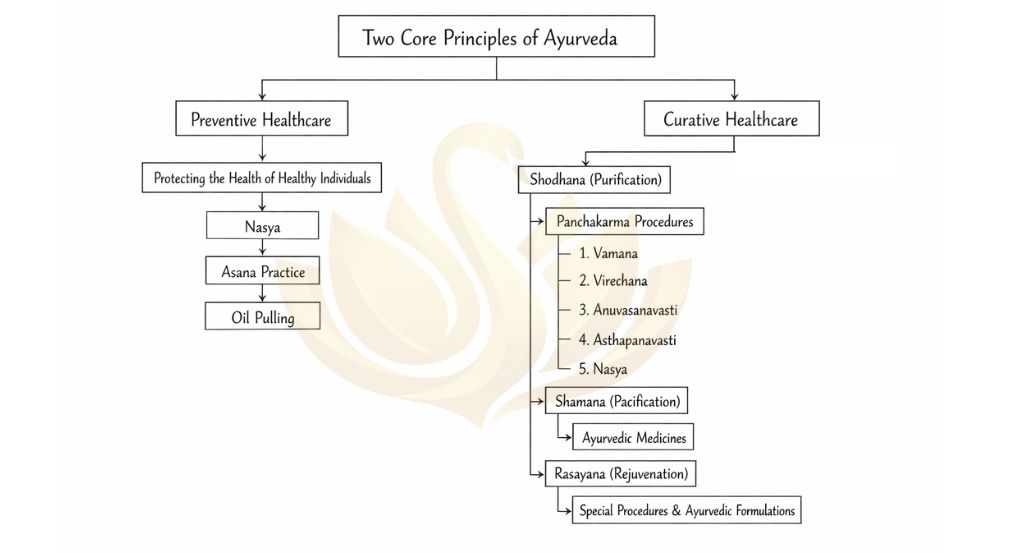
Protecting the health of a healthy individual (preventive healthcare)
Curing the disease of a patient (curative healthcare)
Preventive Healthcare: Ayurveda Edition
Can you believe the fact that Ayurveda described about wellness 5000 years ago? Yes, you heard it right. Like today, it’s not about trendy gadgets / supplements/ hitting gym no matter what. Ayurvedic wellness is all about incorporating consciously curated daily and seasonal rituals which nourishes body, mind and soul which are surprisingly functional and valid till date. These rituals range from the time of waking up to exercise, to diet, to sleep and a lot more in between. Some of the popular practices like abhyanga, nasya, yoga asana practice, oil pulling etc.., comes under Ayurvedic Wellness.
Curative Healthcare: Ayurveda Edition
Disease treatment protocol in Ayurveda is exceptional. It happens in 3 steps
Shodana (Purification)
Shamana (Pacification)
Rasayana (Rejuvenation)
Ayurvedic Monthly Newsletter
A monthly dose of Ayurveda for modern living.
Seasonal wellness tips, herbs, and simple rituals.
Let’s start with an example. A greasy / dirty vessel must be cleaned first before we cook something in it. The same way, when the disease is in a stage of complete manifestation, the person has to undergo cleansing therapy before administering any kind of medicines. For this purpose Ayurveda described 5 cleansing processes popularly known as Panchakarma (in sanskrit language, pancha means 5 and karma means procedures). They are as follows: 1. Vamana (therapeutic emesis) 2. Virechana (therapeutic purgation) 3. Anuvasana vasti (medicated unctuous enema) 4. Asthapana vasti (medicated decoction enema) 5. Nasyam (administering oil based / water-based herbal active principles through nostrils)
SHAMANA
Here we have wide range of Ayurvedic classical and proprietary medications for treating several disease conditions by breaking the disease pathogenesis. If the stage of disease is not chronic or is having a recent onset then there is no need for a person to undergo panchakarma procedures. If the stage of disease is chronic, then a person must go through shodana procedure first followed by using medications to subside the disease.
RASAYANA
The set of procedures and formulations made out of herbs which prevent the recurrence of the disease and preserve the health of an individual is known as rasayana with respect to Ayurveda.
Unpacking the concept of Prakriti
Prakriti means Nature i.e. Nature of the person. No two persons on this planet are the same. Every individual is a unique creation. Sometimes, they might look the same in appearance but their preferences / choices / thought processes are entirely different. Ayurveda says that it’s because of combination of different doshas in different degrees at the time of fertilization (when mom’s egg meets dad’s sperm and a single celled you are formed). The process of this combination of doshas is entirely dependent on the doshic status of the couple which is highly influenced by their diet and lifestyle habits.
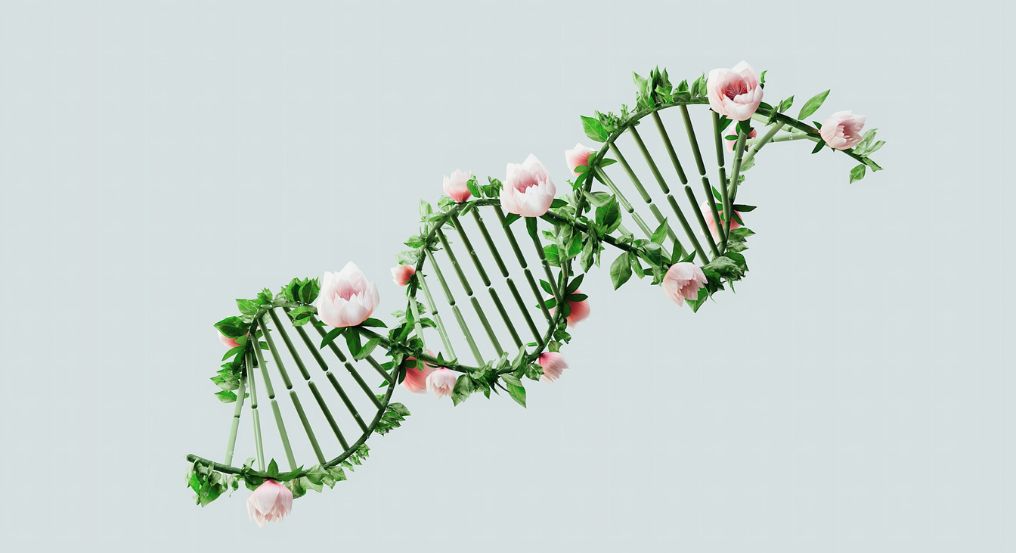
To summarize, prakriti is the genetic makeup of an individual and understanding the prakriti of an individual is extremely important for ayurvedic doctors because it helps us in choosing the right herbs and giving that customized prescription of diet and lifestyle habits as well.
The professional degree of an ayurvedic doctor in India is called “BAMS” which stands for Bachelor of Ayurvedic Medicine and Surgery. It’s a 5.5-year graduation equivalent where ayurvedic doctors learn all about assessment of prakriti, doshas, diseases, herbs, treatments, diet, lifestyle and earns the capability to personalise them according to the need of an individual. This process of personalization cannot be done by companies that sells herbs or that make supplements or health drinks or assorted herbal teas. This is why some popular herbs like Ashwagandha, Shilajit, Turmeric, Giloy etc…, might work for some and might show allergic reactions to others.
If you want to know to what all the diseases Sakhi Ayurveda offers treatment for,(click here). If you are planning to take professional ayurvedic consultation with me, (click here)
Conclusion
I have summarized this blog post in the video below. Feel free to check it out.
[…] where these pieces fit into the puzzle of Ayurveda, I highly suggest you to checkout my blogpost on what is ayurveda first and then come back here. The literary meaning of dosha is fault. You’ll get to know the why […]

[…] where these pieces fit into the puzzle of Ayurveda, I highly suggest you to checkout my blogpost on what is ayurveda first and then come back here. The literary meaning of dosha is fault. You’ll get to know the why […]